Subcutaneous (SubQ) — the default for peptides
Almost every peptide in this library is dosed subcutaneously. The needle goes into the fat layer just under the skin, not into muscle. Insulin syringes (29–31G, 5/16" or 1/2" length) are the standard tool — short enough that you cannot easily miss the SubQ layer.
Common SubQ sites (in order of community popularity)
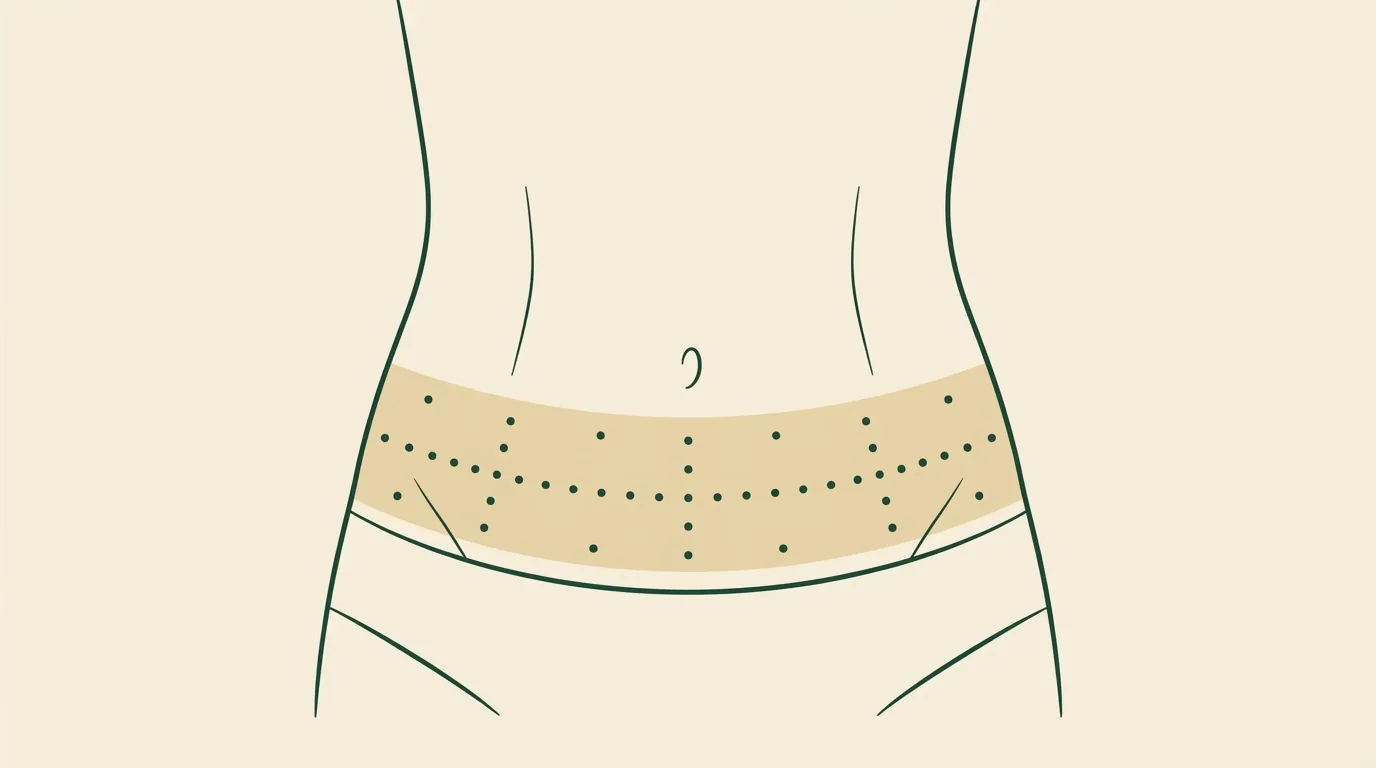
Lower abdomen
The most common site. Roughly the area below the navel and to either side, avoiding a 2-inch circle around the belly button itself. Easy to access, plenty of fat in most people, fast and reliable absorption.
- Pinch a roll of skin/fat to lift it away from underlying tissue.
- Insert at 45–90° depending on how much fat you have to pinch.
- Stay at least 1 inch (~2.5 cm) from the navel and any scars.
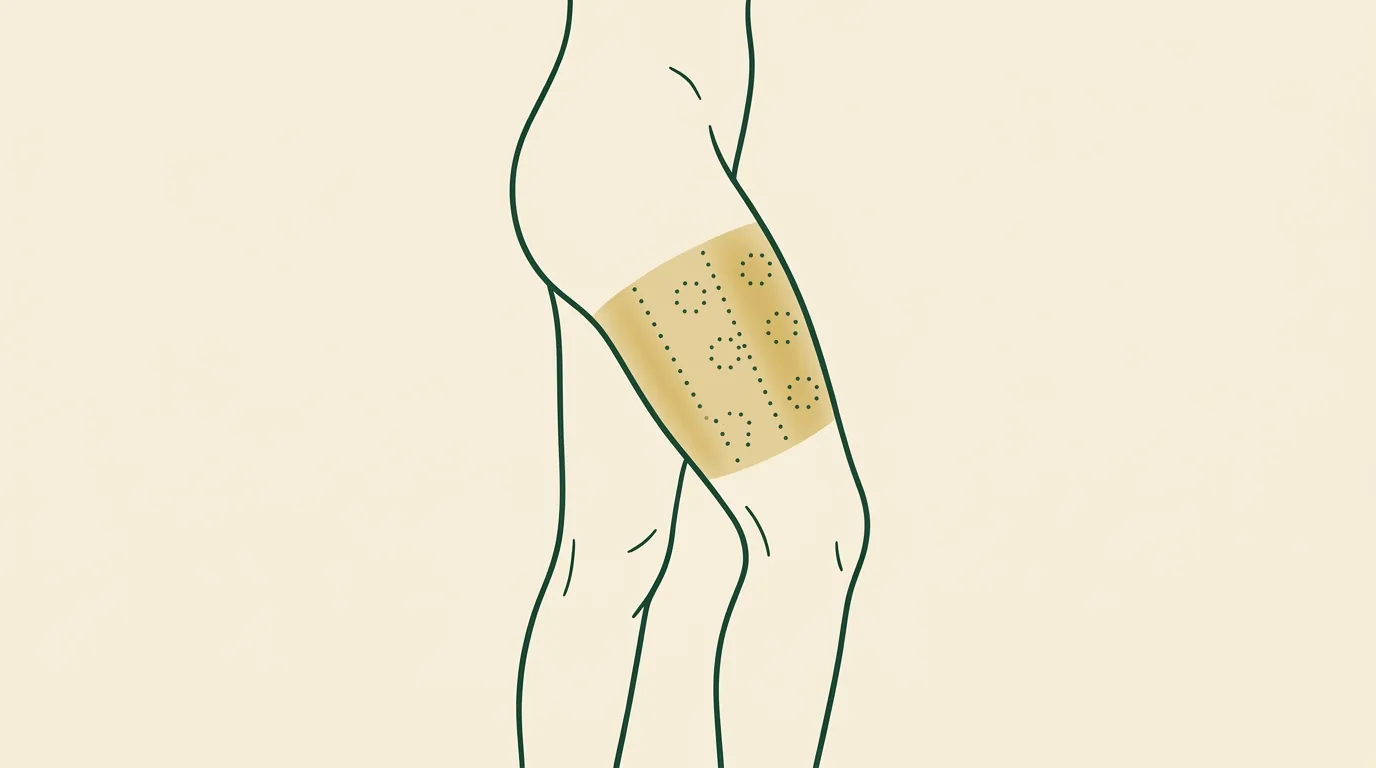
Outer thigh
The middle and upper outer-thigh fat pad. Good alternative when the abdomen is rotated out, easy to self-inject, comfortable for users who prefer not to inject the abdomen.
- Sit with the leg slightly bent — relaxes the muscle and lifts the fat.
- The middle third of the outer thigh is the sweet spot.
- Avoid the inner thigh (femoral artery is closer to the surface there).
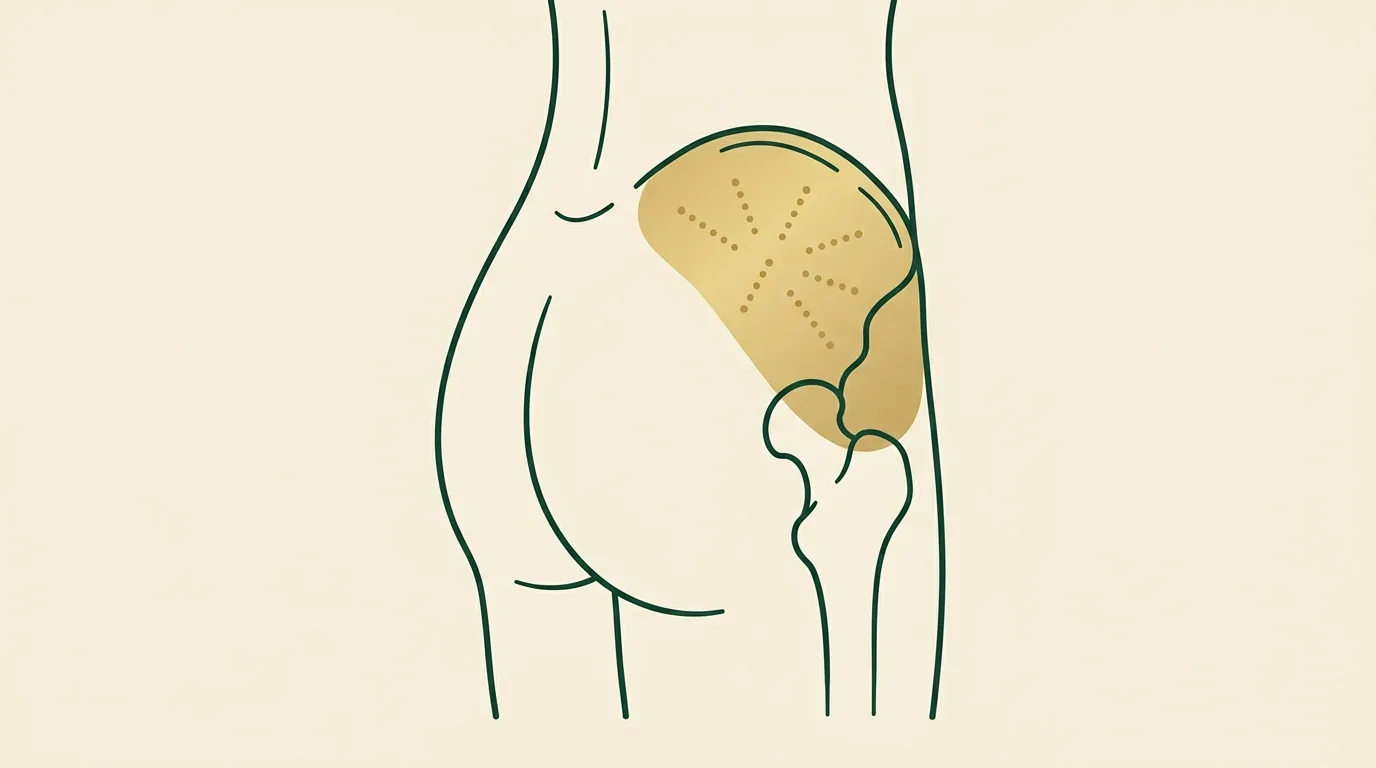
Upper buttock / hip flank
The 'love handles' / upper outer buttock area. More fat in most adults than the thigh. Common when rotating away from abdomen.
- Slightly above the iliac crest (the top of the hip bone).
- Self-injection here is awkward; many users have a partner help.

Triceps / back of upper arm
The fat pad on the back of the upper arm. Less common because reach makes it hard to self-inject without a partner.
- Easier with a partner.
- Pinch firmly — the SubQ layer here is thinner than the abdomen.
Rotation — the rule of thumb
Don’t inject the same square inch of skin two days in a row. Repeated injections in the same spot cause local inflammation, fat-tissue changes, and reduced absorption — problems that compound over months.
A simple rotation pattern
- Daily peptides: rotate through 4 quadrants of the abdomen — upper-left, lower-left, upper-right, lower-right — moving 1 inch from the previous site each day. After 4 days, cycle to the thighs/hips for a week, then back. This gives any given square inch ~3 weeks to recover before being used again.
- Weekly peptides (e.g., tirzepatide, semaglutide): any clean site works since you’re not stressing one area. Keep an informal "last week I did the right side" rule.
- Multiple peptides per day: use different sites for each peptide. Two SubQ injections in the same skin area within a few hours is unnecessarily concentrated.
Sterile technique — the four habits
- Wash your hands. Soap and water for 20+ seconds, before you touch anything peptide-related.
- Alcohol-swab the vial septum and the injection site. Let both air-dry for ~5 seconds before piercing skin or rubber. Wet alcohol stings; dry alcohol disinfected.
- Use a fresh needle every injection. Reusing a needle dulls the tip (more painful), risks contamination, and accelerates wear on the rubber stopper of the vial. Insulin syringes are single-use.
- Dispose in a sharps container. Hard-walled, puncture-resistant. Many pharmacies take full sharps containers for free. Don’t throw needles in regular trash.
What to expect at the injection site
- Mild redness, small welt, brief stinging: normal for 30 minutes to a few hours.
- Small bruise: common, especially in the abdomen. Usually means you nicked a small subcutaneous capillary. Not a problem.
- Persistent itch or hard lump >48 hours: may indicate a local hypersensitivity. Note which peptide and which site, and discuss with your clinician.
- Spreading redness, warmth, fever: stop injecting and seek medical attention. Cellulitis is rare with insulin syringes but possible if technique slips.
Intramuscular (IM) — rare for peptides
IM injection delivers the dose into muscle (not fat), using a longer needle (typically 22–25G, 1–1.5" length) at a 90° angle. Almost no peptide in this library is dosed IM. Some HCG and TRT-adjacent compounds are, but those are outside scope. If a community protocol calls for IM peptide dosing, verify with a clinician — it’s usually not necessary and adds avoidable risk.
Topical (e.g., GHK-Cu skin formulations)
For topical applications, the “injection” framing doesn’t apply. Standard skincare hygiene is sufficient: cleansed dry skin, clean fingertips or applicator, twice-daily cadence is typical for cosmetic GHK-Cu protocols.
One thing this guide won’t do
Tell you exactly which site to use for a specific peptide. The site choice is rarely the limiting factor in efficacy — what matters more is consistent technique, rotation, and dose accuracy. When the literature says “subcutaneous,” any of the SubQ sites above are acceptable.
Reminder: Juno is a harm-reduction reference. The information above is general best practice; your clinician can give you site-specific guidance for your body, your peptides, and any conditions or medications that change the calculus.